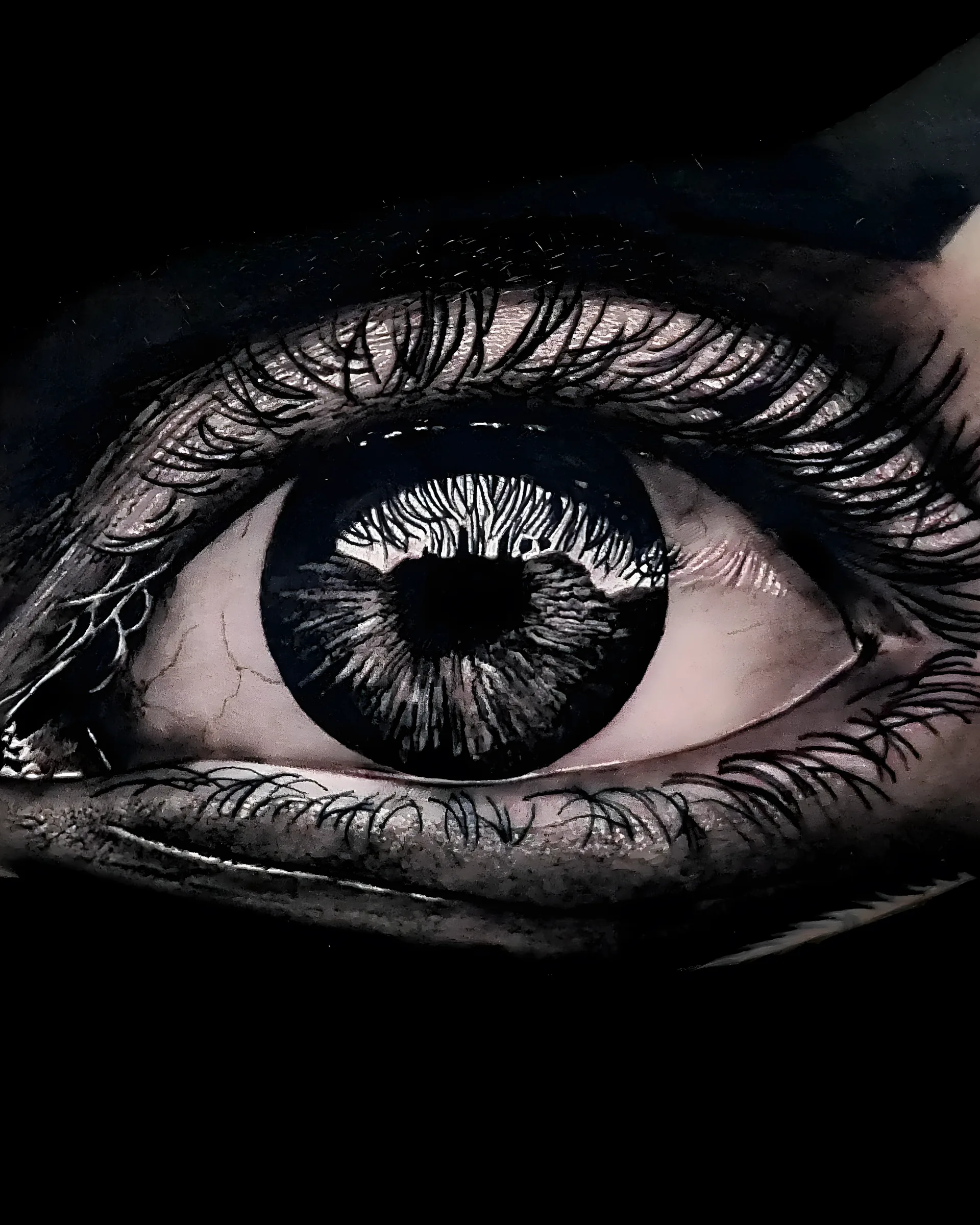
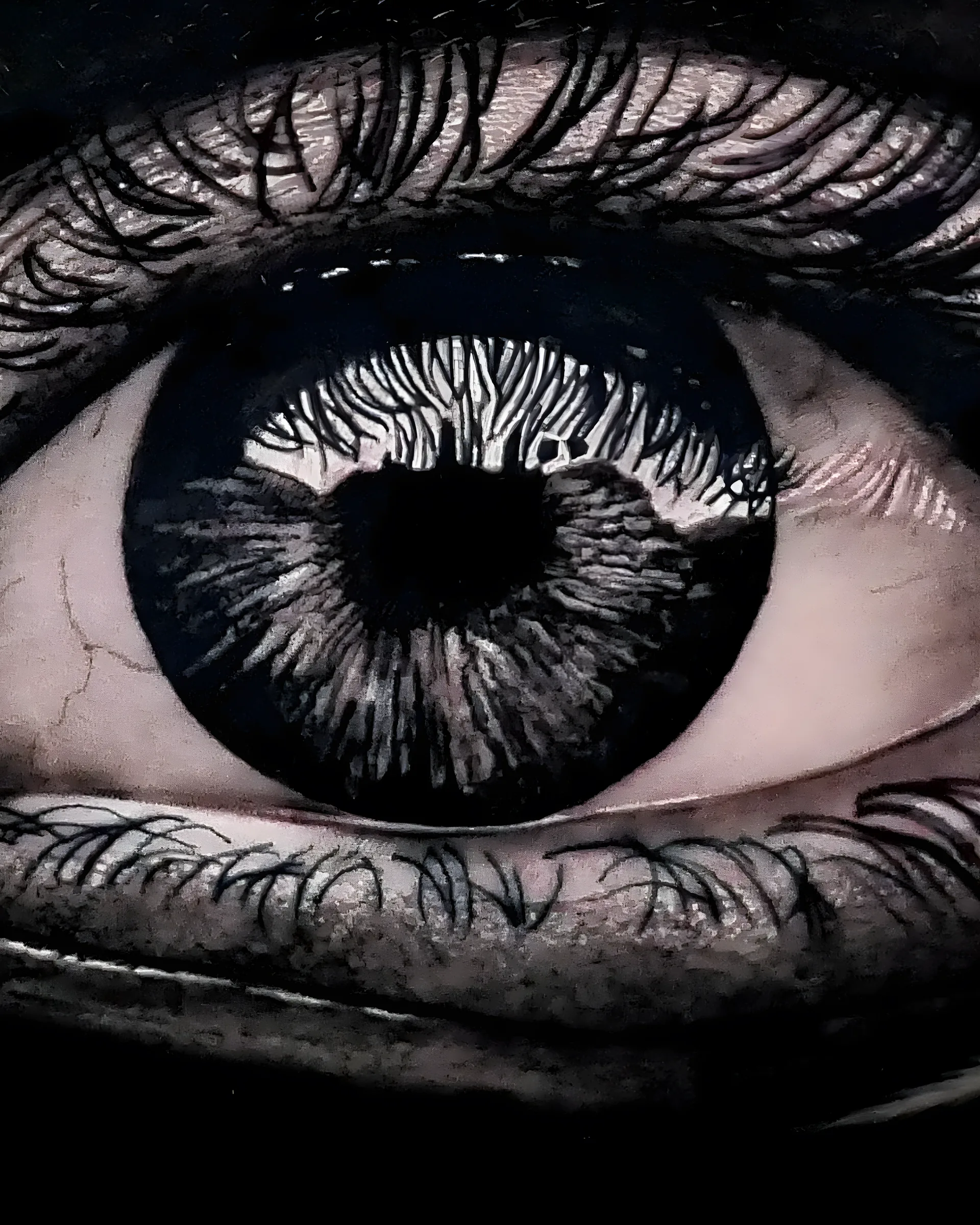
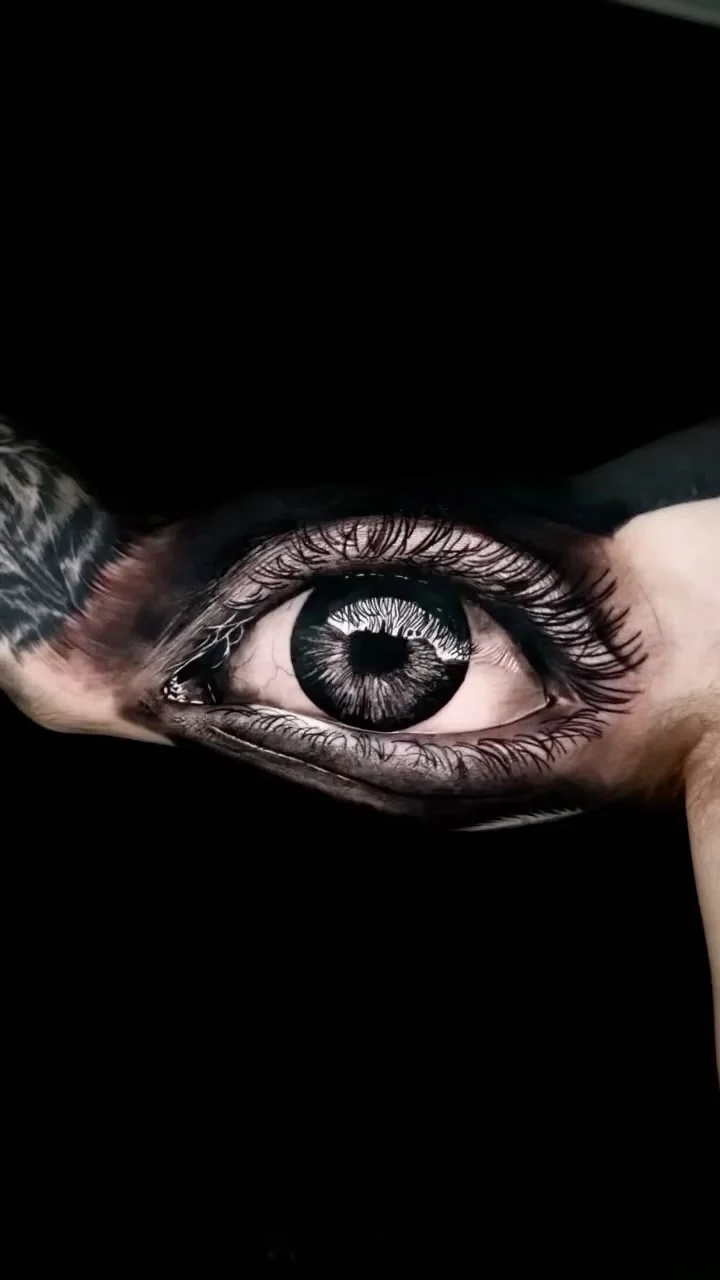
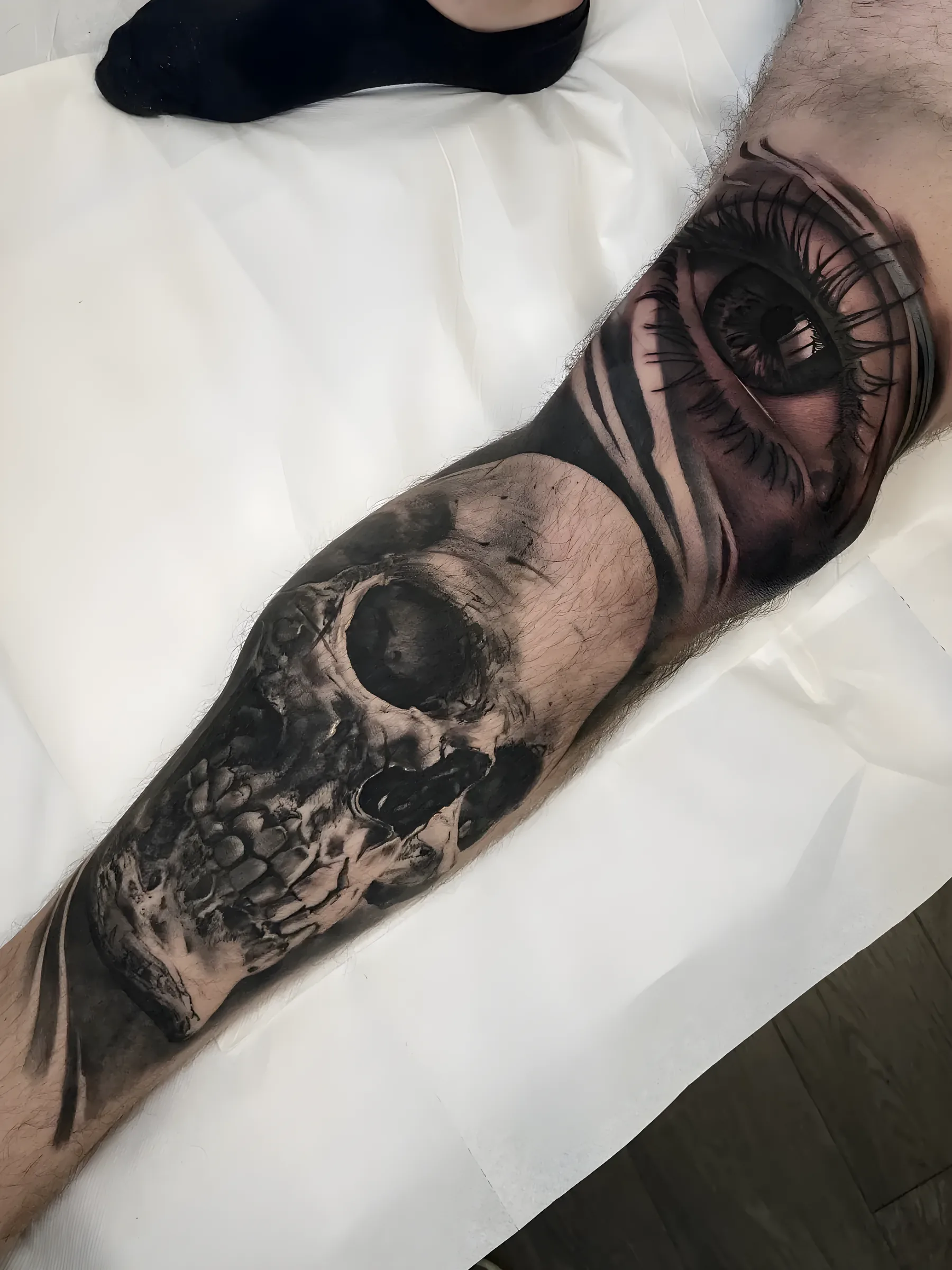
Small realism is harder than large realism, not easier. Everything that makes an image readable has to survive in a space where ink will spread slightly over the years.
The realistic eye is the test piece for this: lashes, the wet edge of the lid, and an iris that has structure rather than a grey circle.
Because ink spreads a little in skin over years. At a large size that softens an image. At a small size it can erase the detail that made it recognizable.
It depends entirely on the subject. An eye can be small and still work. A human face usually cannot.
Small pieces on hands, fingers and feet will. Small pieces on the forearm generally will not.
Yes. This is exactly the kind of piece that suits a convention day.
Requests go straight to Federico, not to an agency inbox. He answers from his own address.