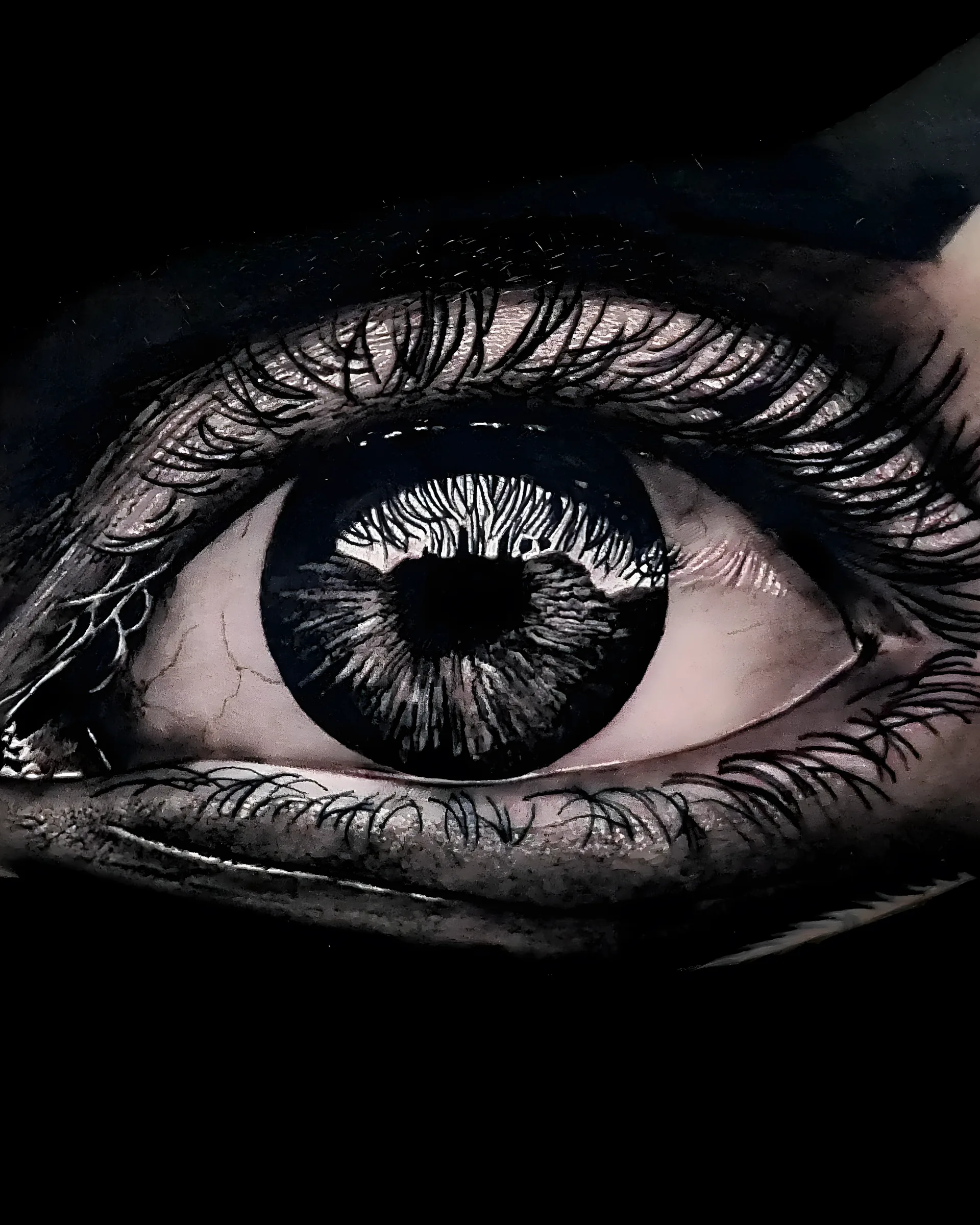
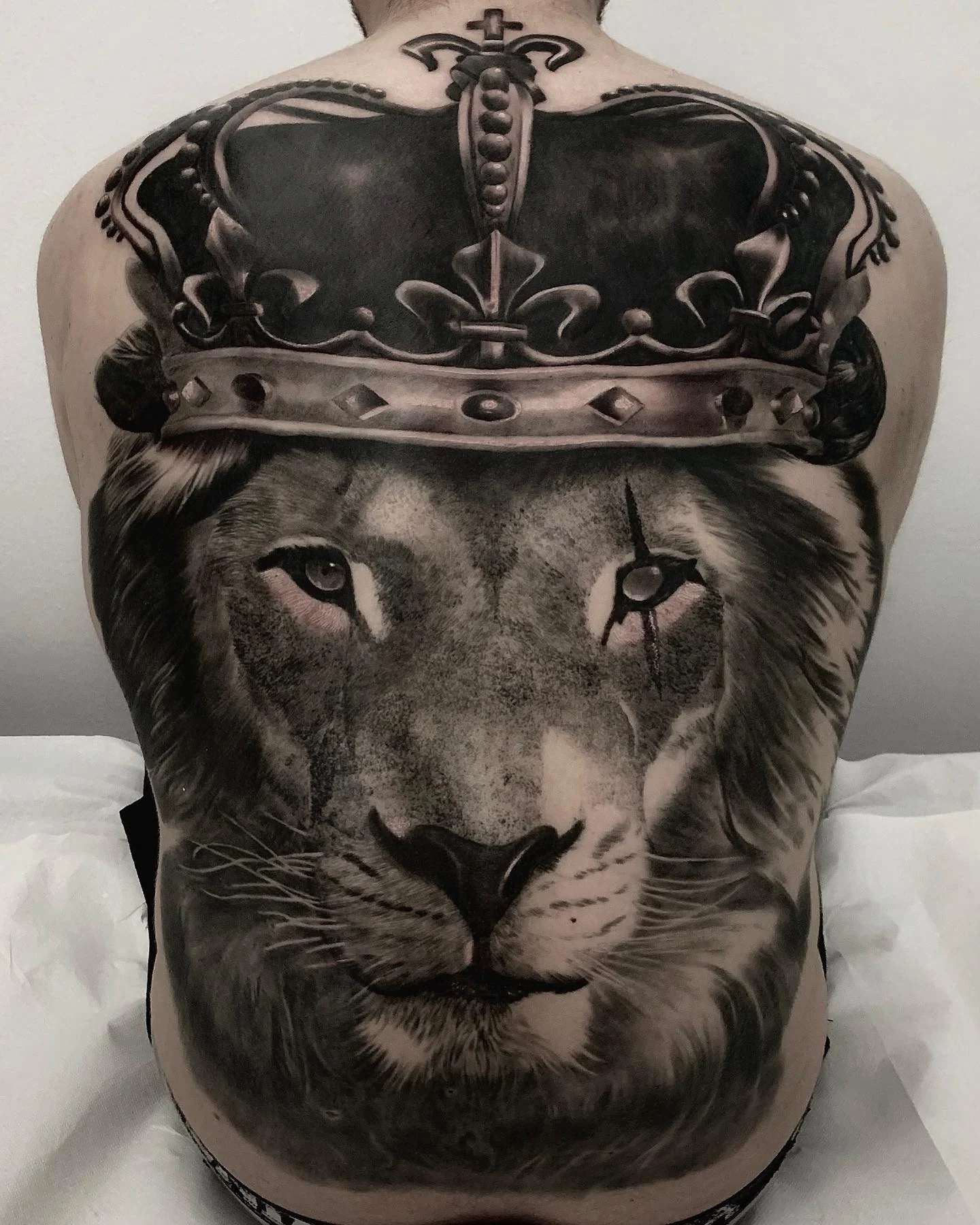
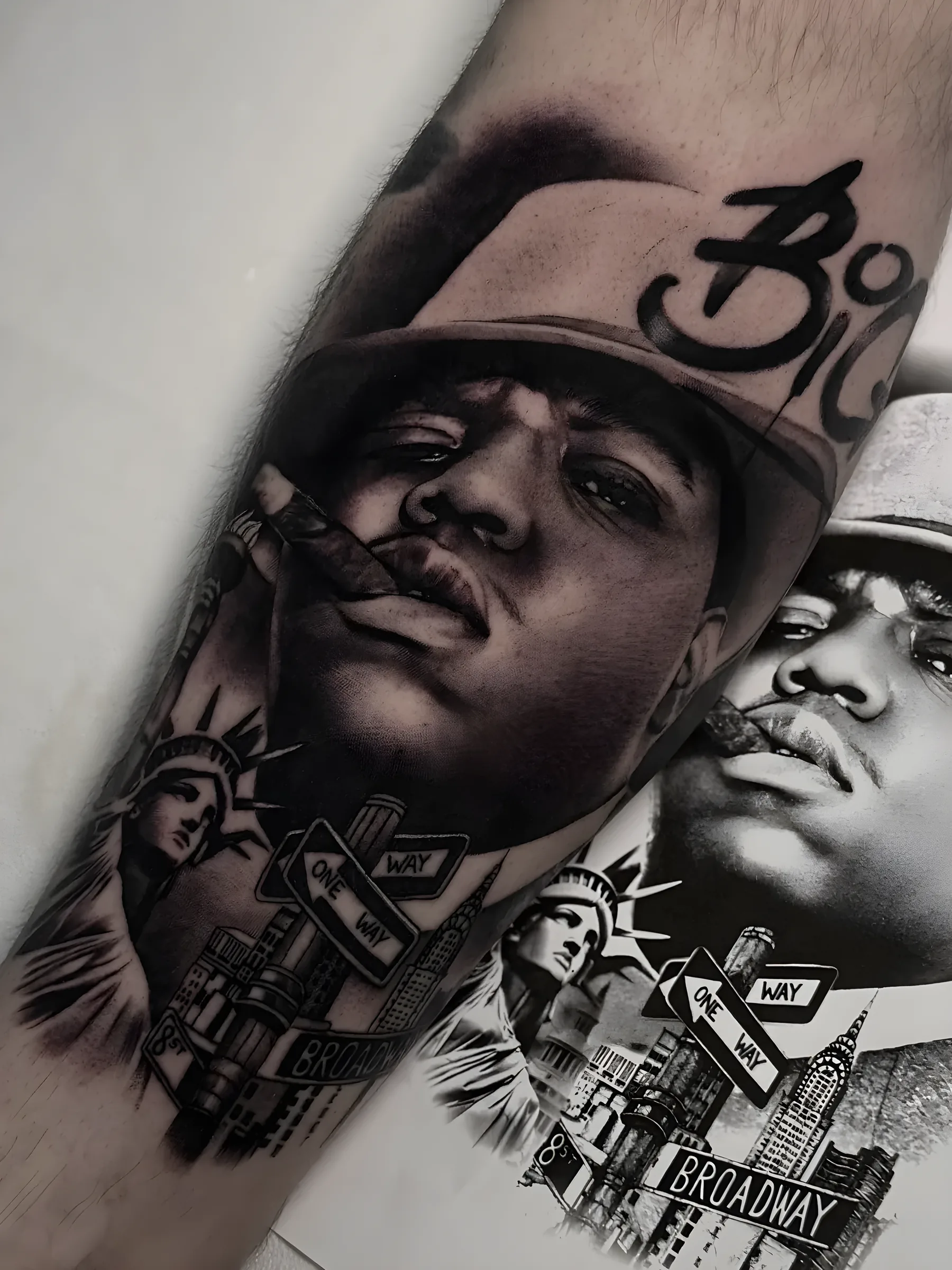
No color, no outline. A face made only out of light and shadow, built so it still reads as a face years after it has settled.
Black and grey means one pigment. Every tone in the tattoo is that black, diluted to a different strength. There is no outline holding the shape together, so every edge in the image is a change of tone rather than a line. That is what makes it read as a photograph and it is also why it is unforgiving.
Grey wash is black ink thinned with distilled water into a graded set: a light, a medium, a dark, and the black itself. Tone is built up in passes with the lighter greys rather than by pushing black and hoping it softens.
It takes longer in the chair. What you get for that is range. A portrait that used the whole set still has contrast left after the skin has settled, because there was a real distance between its lightest and darkest points to begin with.
Every tattoo softens. Ink spreads a little in skin, and the sun takes contrast out of everything. What decides whether a portrait survives that is how much range it had on day one.
Which is why the photographs worth judging an artist on are the healed ones, taken in daylight, months later. Those are here.
The reference photograph decides more of the result than anything the artist does. Sharp, well lit, sent as the original file. A screenshot of a screenshot of an old photo is a soft tattoo waiting to happen, and no technique rescues it.
It is the style Federico Galliani works in: a tattoo built only from black ink and the greys made by diluting it, with no color, so a face is carried entirely by light and shadow the way a black and white photograph is.
Black ink thinned with distilled water into a graded set of lighter greys. Tone is built in layers with those instead of by pushing solid black, which is what lets a portrait keep a full range as it settles.
Black pigment is more stable in skin than most colors, and a piece built from a real range of greys has tone to spare. A piece built by pushing black hard has nowhere to go but flat.
Almost always the reference photograph, then size. A soft, badly lit photo cannot become a sharp portrait, and a face made too small loses the detail that made it a likeness.
Traditional is built on outlines and flat fills designed to stay readable forever. Realism has no outline at all: the edge of a shape is a change of tone, which is why it depends so much on how it is built.
Realism built on real contrast ages fine. Realism built on very fine, very light grey with no dark anchor is what goes soft, because the lightest tones are the first to be lost.
Requests go straight to Federico, not to an agency inbox. He answers from his own address.