Home / Work / Statues, myth and history
Statues and myth

Statues, myth and history

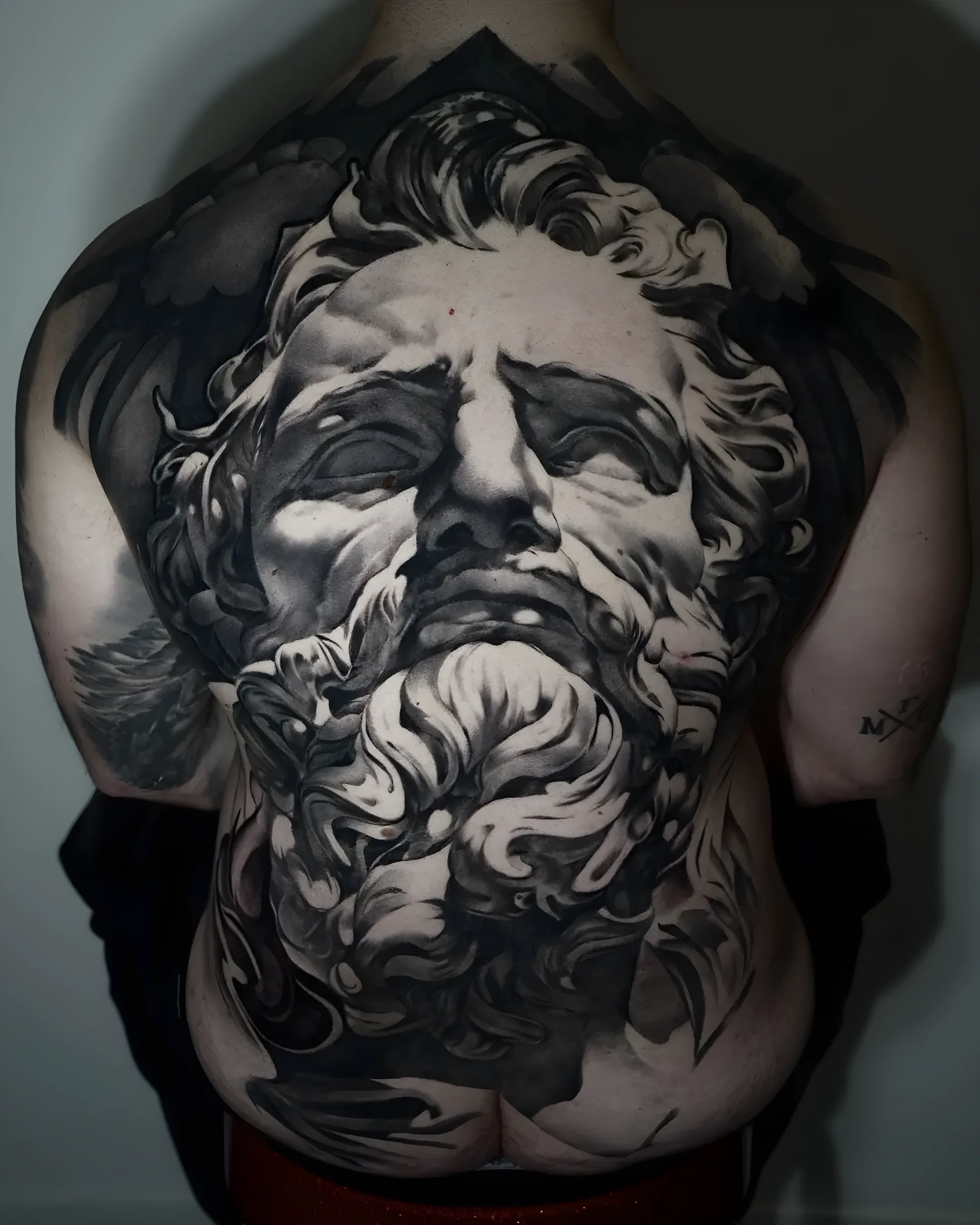
Marble is the natural subject for grey wash. A statue is already a study in light and shadow with no color in it, which is exactly what this technique is for.

Greek statue back piece in black and grey covering the whole back
Greek statue back
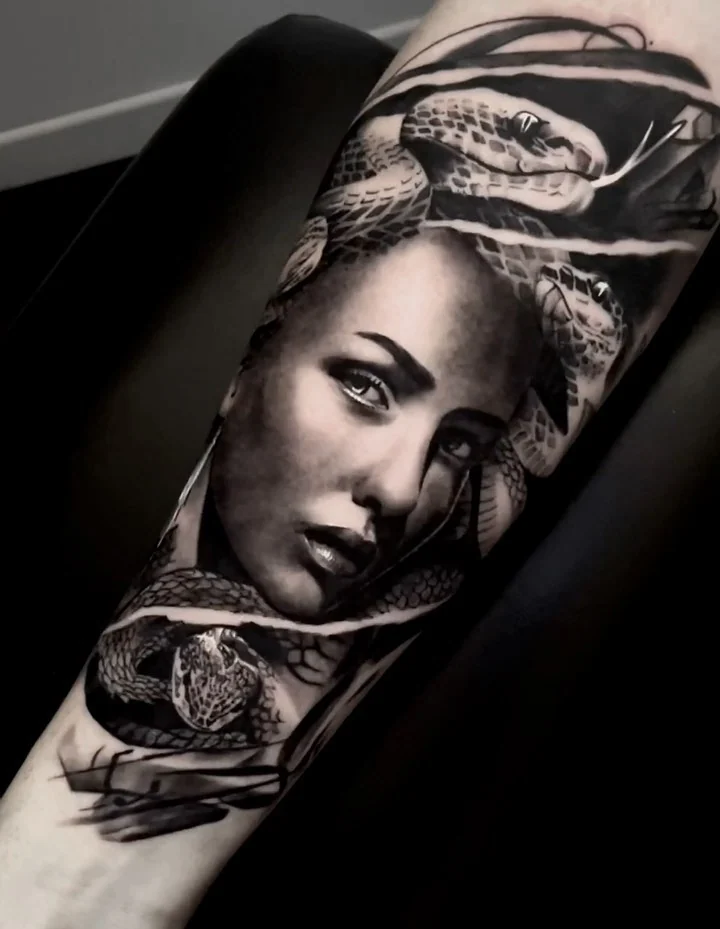
Black and grey Medusa with snakes coiled around her on the forearm
Medusa
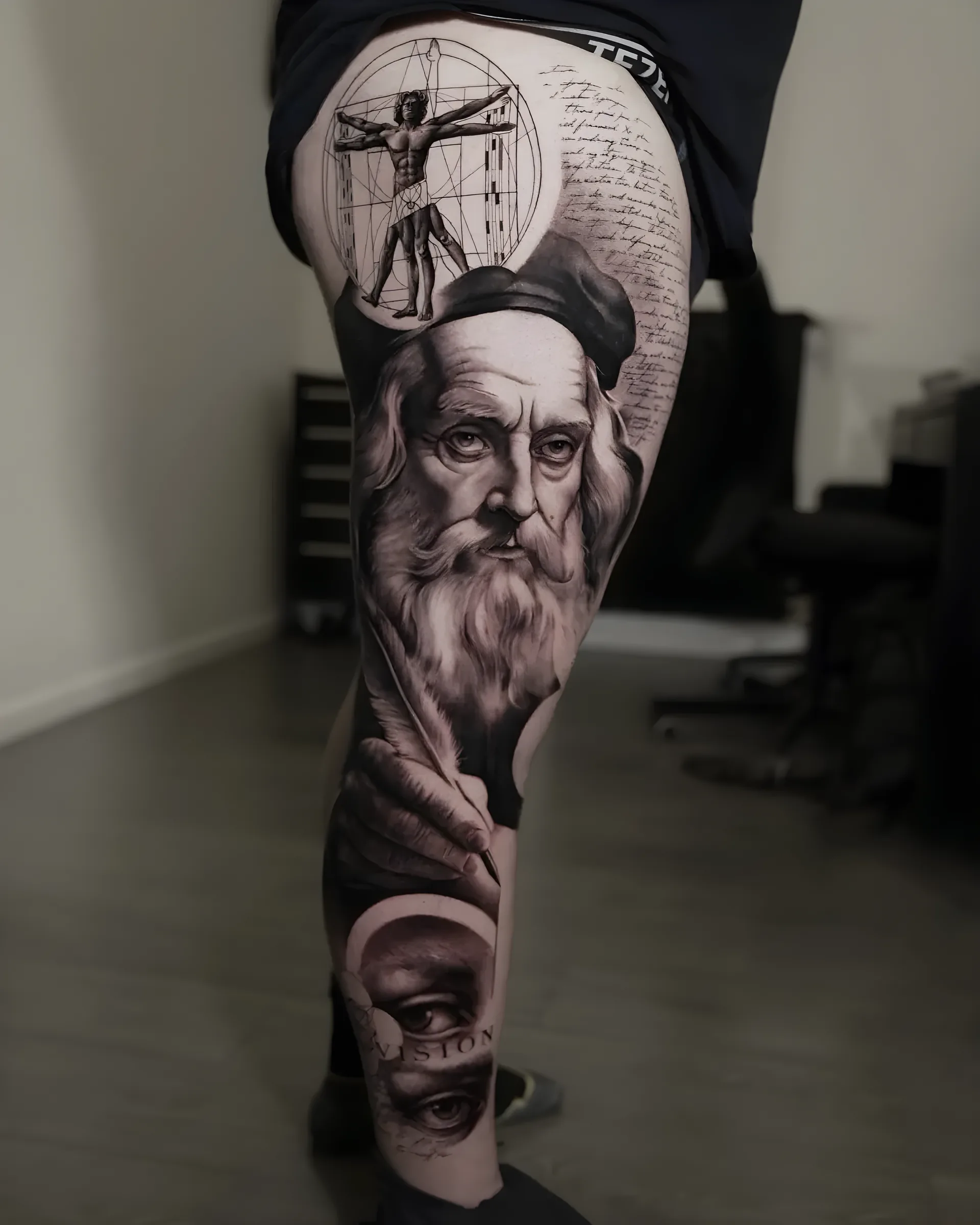
Leonardo da Vinci and the Vitruvian Man down a full leg
Da Vinci
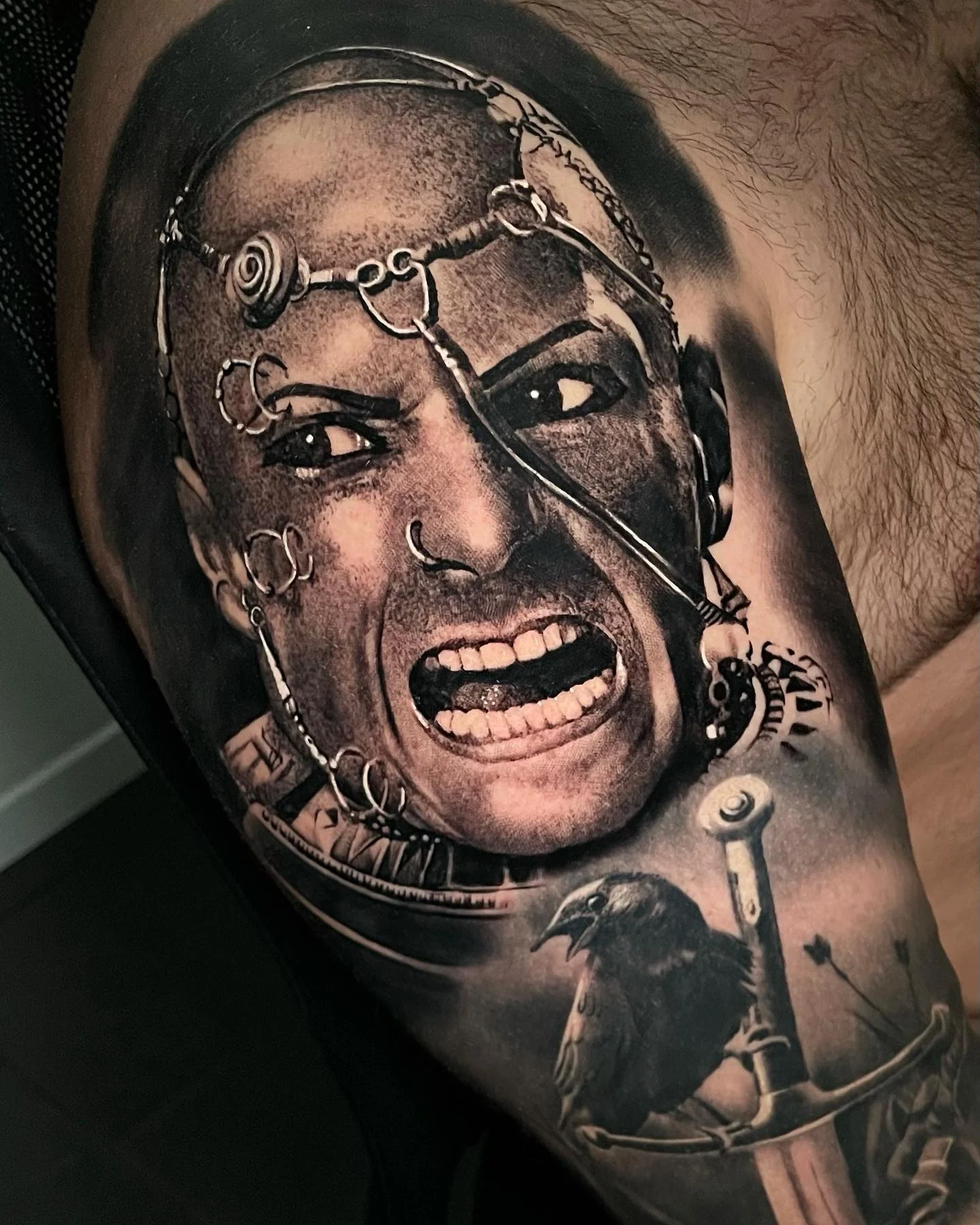
Black and grey warrior shouting, with a raven and a sword
Warrior
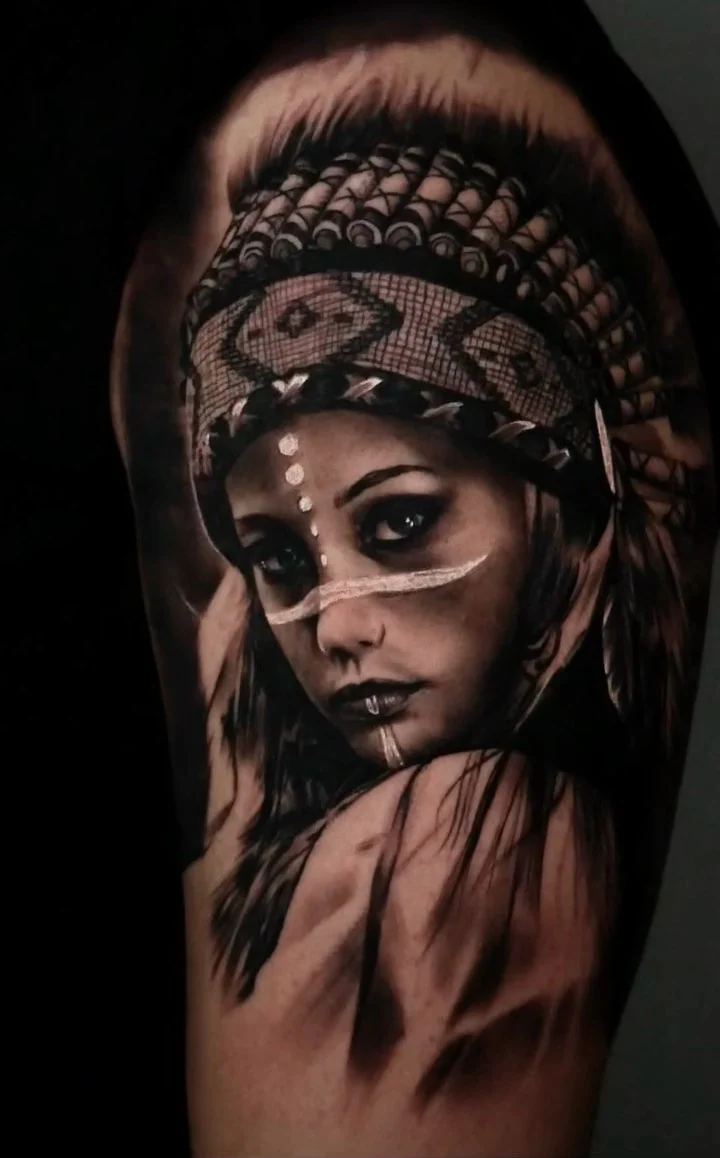
Black and grey portrait of a Native American woman with a feather headdress
Portrait
Black and grey warrior with a raven and a sword
Warrior, detail

It is also the safest large scale subject: a statue does not have to be a likeness of anyone, so it can be pushed as large and as dramatic as the placement allows.

The practical part

Already tattooedGreek statue back piece, Medusa, Cleopatra, warriors, Leonardo da Vinci and the Vitruvian Man.
Why it suits grey washStone is pure tone. No color information is lost by leaving color out.
Best placementsBack, chest, full leg. Marble wants scale.
Ages wellBig shapes and strong light. Very little fine detail to lose.

Questions

Why do statues work so well in black and grey?

Because marble has no color to begin with. Everything that makes a statue readable is light and shadow, and that is precisely what grey wash renders.

How big should a statue piece be?

As big as the placement allows. A statue reduced to a small panel loses the scale that made it impressive.

Can Medusa be done small?

The face can. The snakes are what usually forces it larger, because they need to be separable from each other.

Does a back statue piece need a background?

Not necessarily. Skin left bare around a statue reads as space, and space is what makes it look monumental.

Related

Ask about a piece like this

Requests go straight to Federico, not to an agency inbox. He answers from his own address.